If you’ve ever stared at a crochet pattern that says “worsted weight yarn” and then stared at a yarn label that says absolutely nothing helpful, you’re not alone. Yarn weight is one of those things that sounds complicated but is actually pretty simple once someone just… explains it properly.
So that’s what we’re doing today. We are going to breakdown every yarn weight, what it’s good for, and which hook to grab. Bookmark this one, you’ll come back to it.
What Does “Yarn Weight” Actually Mean?
Here’s the thing that trips up a lot of beginners, yarn weight has nothing to do with how heavy the skein is in grams or ounces. It refers to the thickness of the strand itself. A thicker strand = a heavier weight. A thinner strand = a lighter weight.
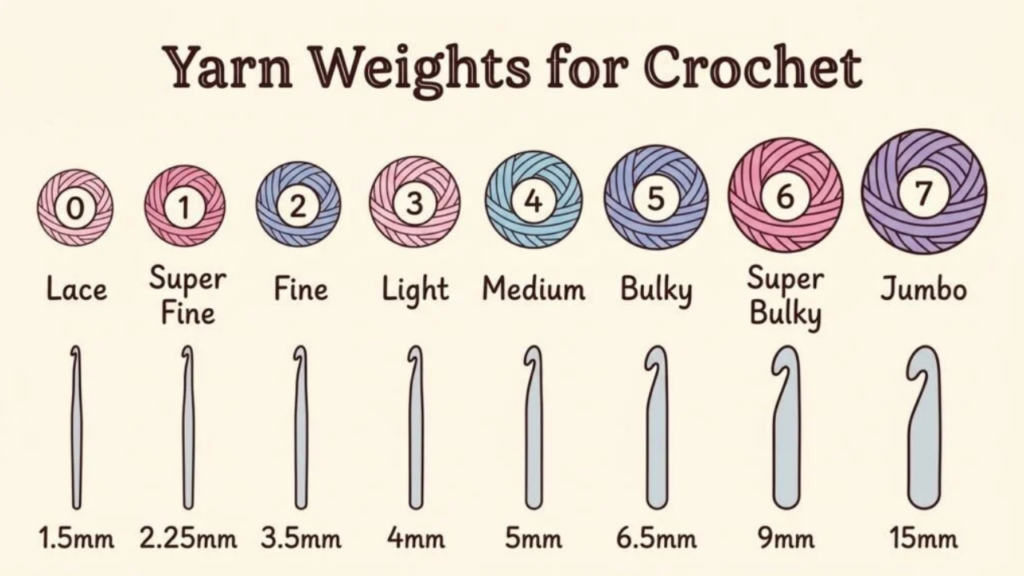
The Craft Yarn Council (basically the official rulebook committee of the yarn world) created a numbering system from 0 to 7 to standardize this. Most yarn labels have a small skein symbol with a number inside, that’s your weight category.
The higher the number, the thicker the yarn. Simple.
The 8 Yarn Weight Categories
0 — Lace
The thinnest yarn you can crochet with. We’re talking thread-thin, delicate, almost see-through fabric. It’s beautiful but it requires patience, a very small hook (1.5–2.25 mm), and honestly? Some life experience.
- Best for: Doilies, delicate shawls, intricate lace work.
- Hook size: 1.5 mm – 2.25 mm
- Beginner-friendly? Not really. Save this for when you’re comfortable with tension.
Crewchet tip: If you pick up lace weight yarn by accident at the store, don’t panic. It works beautifully for amigurumi details or adding texture to a project as a second strand.
1 — Super Fine (Fingering / Sock Yarn)
Still thin, but a little more forgiving than lace. Fingering weight yarn is the go-to for socks (hence the nickname “sock yarn”), lightweight shawls, and baby items that need to be soft and breathable.
- Best for: Socks, lightweight scarves, delicate baby clothes, small amigurumi. Hook size: 2.25 mm – 3.5 mm
- Beginner-friendly? Getting warmer. Still needs consistent tension.
2 — Fine (Sport / Baby Weight)
A step up from fingering. Sport weight yarn makes fabric that’s light but has a little more body to it. Great for garments you want to drape nicely without being too heavy.
- Best for: Baby blankets, lightweight cardigans, summer tops, dishcloths.
- Hook size: 3.5 mm – 4.5 mm
- Beginner-friendly? Yes! A nice middle ground for beginners who want to try garments.
3 — Light (DK / Double Knitting)
DK weight is a favorite in the crochet world for a reason, it’s thin enough to show stitch detail beautifully, but thick enough to work up at a decent speed. If you’ve ever bought yarn in a craft store in the Middle East or Asia, a lot of “medium” local yarns actually fall into this category.
- Best for: Lightweight blankets, beanies, amigurumi, garments.
- Hook size: 4 mm – 4.5 mm
- Beginner-friendly? Yes, especially for hats and small projects.
Crewchet tip: If your local yarn doesn’t have a label or weight number, this is a great one to test. Wrap the yarn around a ruler, if you get around 11–14 wraps per inch, it’s DK weight.
4 — Medium (Worsted / Aran)
The most popular yarn weight in the entire crochet world, and for good reason. Worsted weight is the sweet spot, not too thin, not too thick, works up at a satisfying speed, and shows stitches clearly. When a pattern just says “yarn” without specifying, it probably means worsted.
- Best for: Blankets, scarves, hats, bags, amigurumi, granny squares. Basically everything.
- Hook size: 5 mm – 5.5 mm
- Beginner-friendly? 100%. This is where you should start.
Crewchet tip: When I say “medium weight yarn” in my patterns, I mean worsted. If you can only buy one type of yarn to practice with, make it this one.
5 — Bulky
Now we’re getting chunky and cozy. Bulky yarn works up fast, like, finish-a-blanket-in-a-weekend fast. The fabric is thick, warm, and satisfying, but the large stitches mean stitch detail gets a bit lost.
- Best for: Thick blankets, winter scarves, chunky beanies, home décor.
- Hook size: 6 mm – 9 mm
- Beginner-friendly? Very! The speed is addictive.
Heads up: Bulky yarn eats through your yarn stash quickly. A hat that takes 100g in worsted might take 200g in bulky. Always buy a little extra.
6 — Super Bulky
These are the big guns. Super bulky yarn is thick, squishy, and perfect for projects you want done now. Blankets work up in hours, not days. The texture is chunky and dramatic.
- Best for: Chunky throw blankets, oversized cowls, quick gifts.
- Hook size: 9 mm – 15 mm
- Beginner-friendly? Surprisingly yes, big stitches are easy to see and count.
7 — Jumbo
The thickest of the thick. Jumbo yarn is almost more like rope at this point. You crochet it with a massive hook or sometimes even your arms. It creates very chunky, very fast fabric.
- Best for: Statement blankets, wall hangings, chunky home décor.
- Hook size: 15 mm and above (or your hands!)
- Beginner-friendly? Fun to try but hard to do detailed work with.
Quick Reference: Yarn Weight Chart
| # | Name | Also Called | Hook Size | Best For |
|---|---|---|---|---|
| 0 | Lace | Thread | 1.5–2.25 mm | Doilies, lace |
| 1 | Super Fine | Fingering, Sock | 2.25–3.5 mm | Socks, baby items |
| 2 | Fine | Sport, Baby | 3.5–4.5 mm | Lightweight garments |
| 3 | Light | DK, Double Knit | 4–4.5 mm | Beanies, amigurumi |
| 4 | Medium | Worsted, Aran | 5–5.5 mm | Everything. Literally. |
| 5 | Bulky | Chunky | 6–9 mm | Thick blankets, scarves |
| 6 | Super Bulky | Super Chunky | 9–15 mm | Quick chunky projects |
| 7 | Jumbo | Arm knit weight | 15 mm+ | Statement pieces |
But My Yarn Has No Label: What Weight Is It?
This is a real problem, especially if you buy yarn from a local market, inherit someone’s stash, or pick up unlabelled yarn at a discount shop. Here’s what to do:
The wraps-per-inch (WPI) trick: Take your yarn and wrap it around a ruler for one inch without stretching or squishing. Count how many times it wrapped:
- 30+ wraps = Lace (0)
- 14–30 wraps = Super Fine (1)
- 12–18 wraps = Fine (2)
- 11–15 wraps = Light (3)
- 9–12 wraps = Medium (4)
- 6–9 wraps = Bulky (5)
- 5–6 wraps = Super Bulky (6)
- Fewer than 5 = Jumbo (7)
It’s not a perfect science but it gets you close enough to find a matching pattern or hook size.
Does Yarn Weight Actually Matter?
Short answer: yes. Very much so.
Using the wrong weight won’t ruin your project, but it will change the size, drape, and feel. If you use bulky yarn for a pattern written in DK, your finished piece will be bigger and stiffer. If you go lighter, it’ll be smaller and drapier.
Always try to match the weight the pattern recommends, and if you’re substituting, swatch first. (I know. Nobody wants to hear “swatch first.” But it genuinely saves you from frogging an entire blanket at midnight.)
What Weight Should a Beginner Start With?
Worsted weight (size 4), always. It’s thick enough to see your stitches, thin enough to show detail, and works up at a pace that doesn’t make you want to quit. Pair it with a 5 mm or 5.5 mm hook and you’re in the perfect zone.
Once you’re comfortable, try DK (size 3) for more refined projects, or bulky (size 5) when you want something fast and satisfying.
Now go find a skein, wrap it around a ruler, and figure out what you’ve been working with this whole time. 🧶
Happy crocheting!